English edition note: this report was published on 8 May 2024; “yesterday” refers to 7 May 2024. Quotations below are translated from the Spanish report.
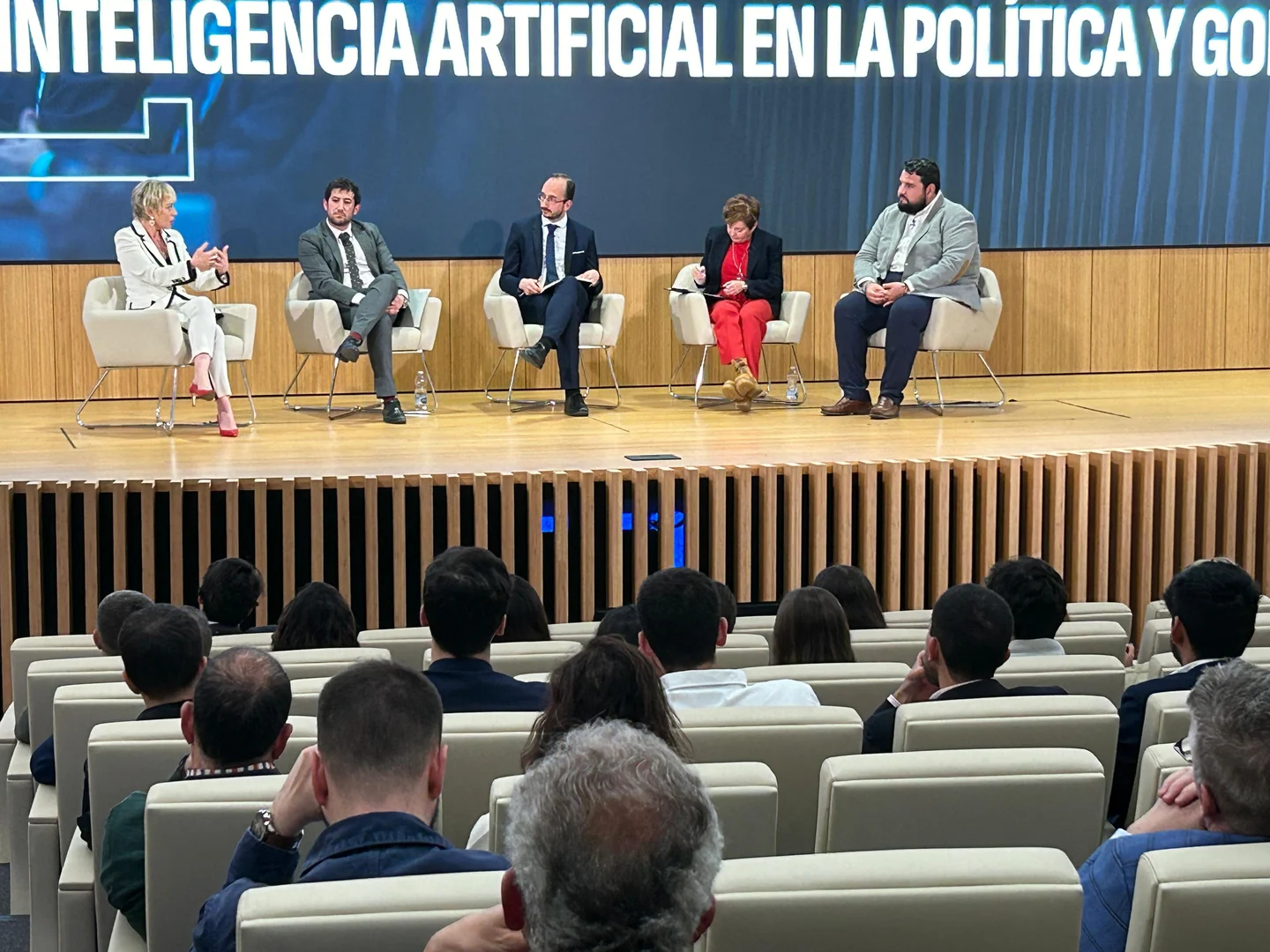
An overview of the event. From left to right: Carme Artigas, Jesús Herrero, Pablo Martín, Olga Gil and Román Robles. The backdrop displays the event theme, “The impact of artificial intelligence on politics and government”.
“Do not expect gradual evolution: in less than five years, artificial intelligence will make everything semi-automated. The challenge is to avoid inequality. Perhaps a time will come when the wealthy are attended to by people, while those with fewer resources have to settle for being attended to by robots or artificial intelligence.” This message from Carme Artigas, co-chair of the UN High-Level Advisory Body on AI, was one of many interesting reflections heard yesterday at the first event organised by estrategIA, the newsletter launched by the ALEPH Educational Institution, held yesterday at the ESIC Business & Marketing School campus.
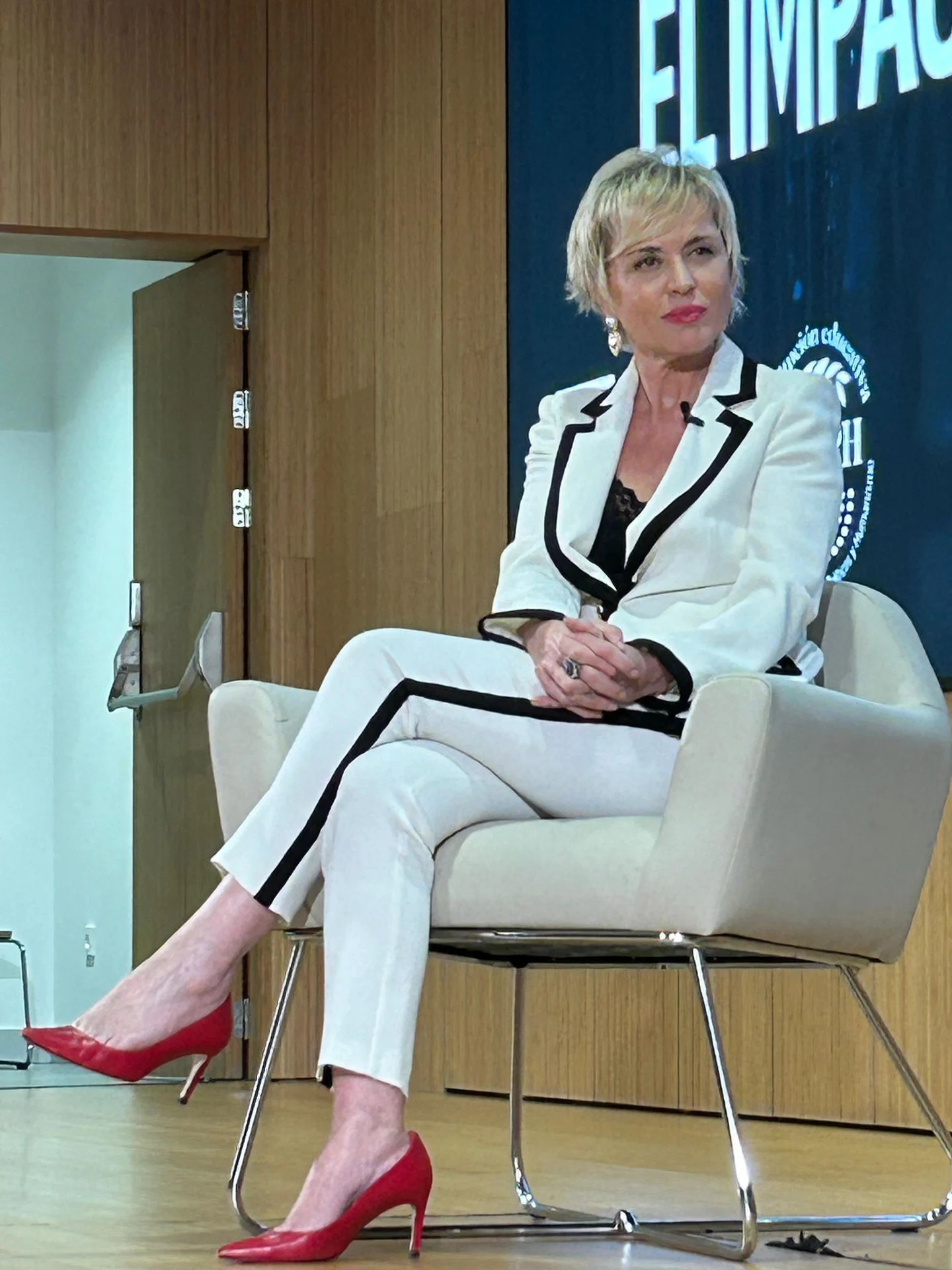
Carme Artigas, co-chair of the UN High-Level Advisory Body on AI.
Artigas, one of the leading figures behind the AI Act thanks to her leadership during the European Union’s marathon negotiations, when she was Secretary of State for Digitalisation and Artificial Intelligence, challenged the idea that regulation holds back innovation: “The arms industry is one of the most heavily regulated, and yet innovation is constant.” Artigas argued that the AI Act makes the following achievements possible:
- Avoiding legislative fragmentation. Regulation does not prevent innovation, whereas having a separate law in each state would create uncertainty that would make it harder to undertake AI projects.
- Regulating present and future uses, with particular attention to protecting human rights.
- Requiring transparency from companies and institutions to prevent risks.
- Defining prohibited uses of AI, with particular attention to preventing social rankings or classifications, manipulation, biometric identification that enables bias based on identity characteristics, and government control of the population.
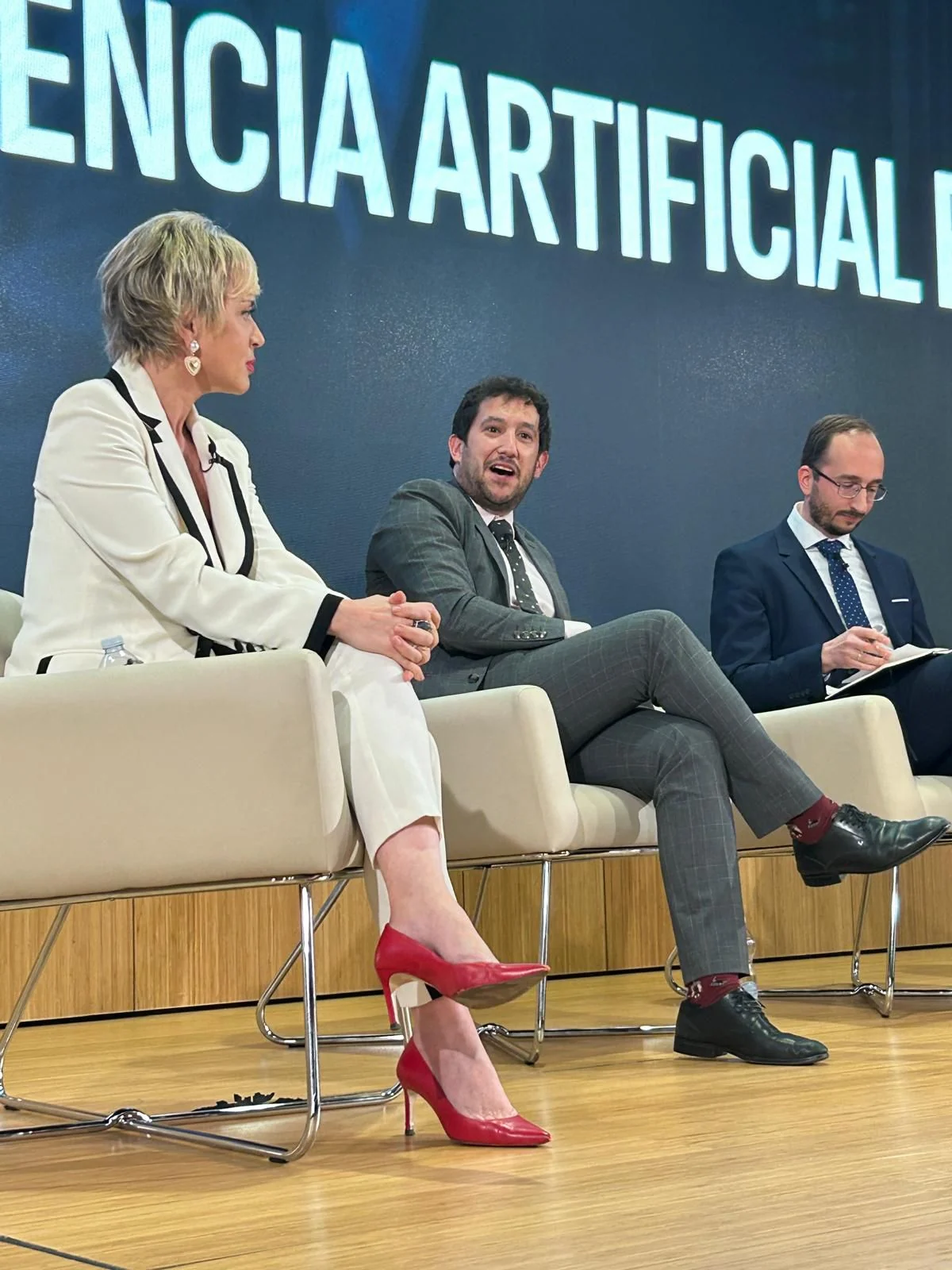
Jesús Herrero, Director-General of Red.es, in the centre of the image.
After discussing the regulatory framework, Jesús Herrero, Director-General of Red.es, stressed that we can be proud of public servants’ efforts to initiate and launch services that improve citizens’ wellbeing. For example, he explained how automating many processes allows Red.es to scale its services to help hundreds of thousands of businesses, something unthinkable a few years ago. Román Robles, a councillor on Galapagar Town Council, brought the discussion of artificial intelligence down to the municipal level. He explained that Microsoft had conducted a study in his municipality and considers that many council processes could be 50% more effective through the use of artificial intelligence.
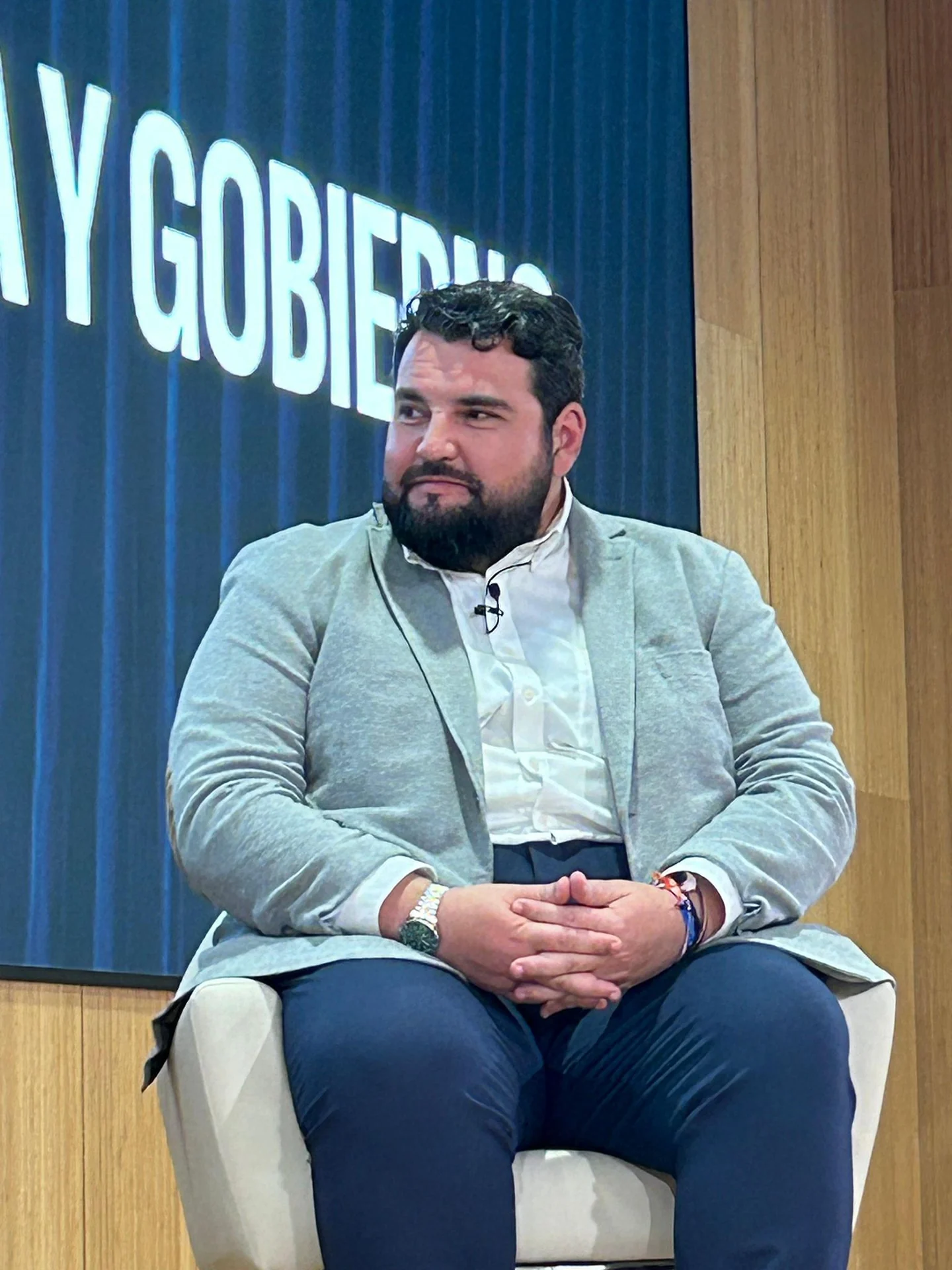
Román Robles, a councillor on Galapagar Town Council.
Herrero then addressed the debate about how artificial intelligence may affect the labour market. He said it is very important to adapt to this context and learn to use AI as another tool, something connected to self-esteem, intention and curiosity about this powerful instrument. He considers the best way to integrate artificial intelligence to be “learning by doing, tinkering”, and incorporating AI as practically as possible into everyday life, as we did when the internet emerged. Román Robles endorsed Herrero’s contribution and described his experience at the council implementing an artificial intelligence agent to address residents’ administrative needs. Robles sees the process as trial and error, something “still under construction” that reduces the administrative burden, freeing time to reinvest in personal attention to citizens.
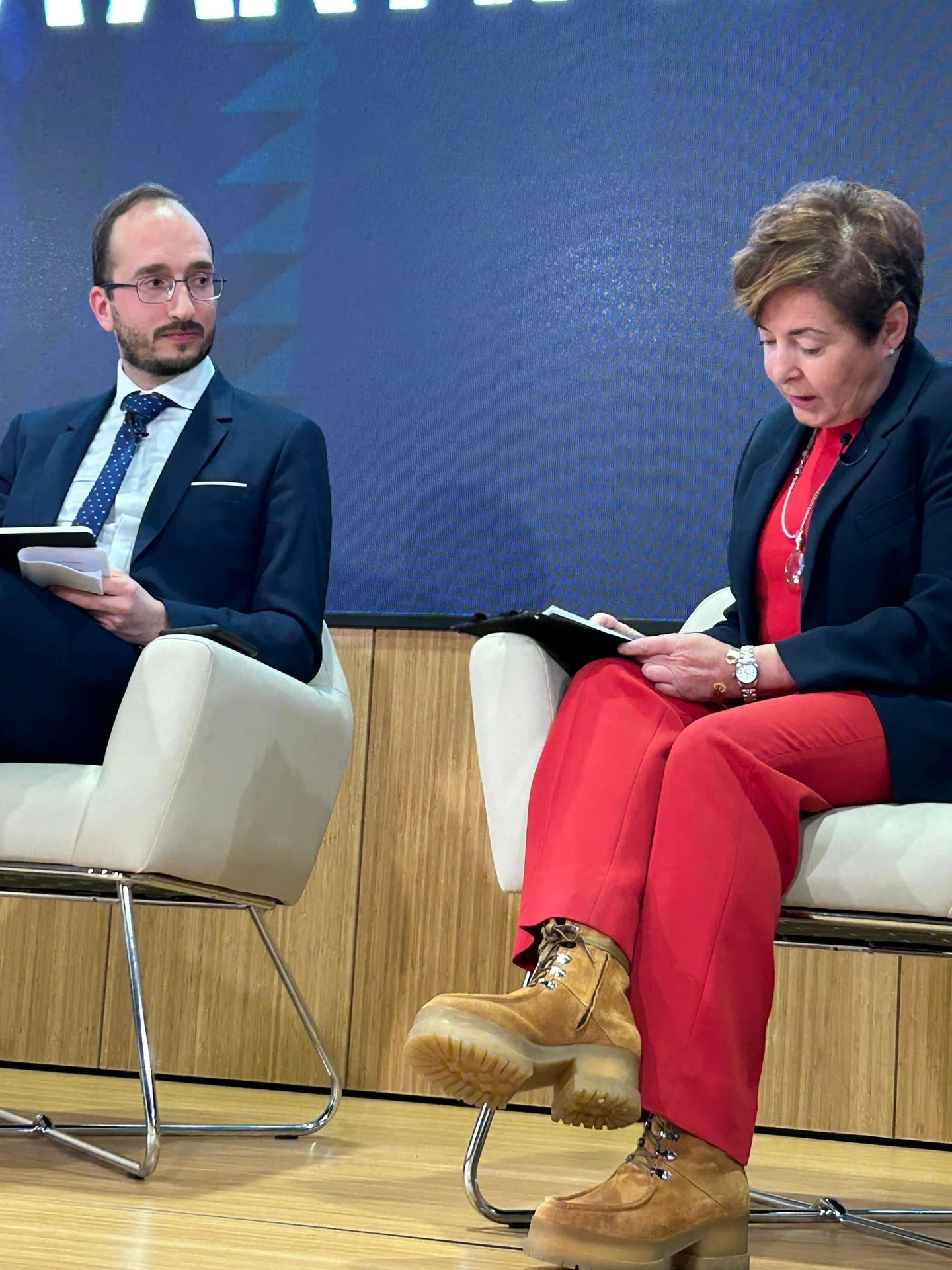
Olga Gil, a researcher on technology regulation at the Complutense Institute of Administrative Science (ICCA) and academic secretary at the Complutense University of Madrid’s School of Government.
Olga Gil, a researcher on technology regulation at the Complutense Institute of Administrative Science (ICCA) and academic secretary at the Complutense University of Madrid’s School of Government, turned to the future and to young people. How will artificial intelligence affect their education? What skills will they need for professional success? Gil set out some forecasts and recommendations in response to these concerns raised by the students present:
- Educational programmes will tend to become shorter. Following European examples such as England, some degrees may be obtained in three years.
- Education will need to be continuous, with constant retraining to avoid falling behind all the advances taking place.
- A global outlook is needed, extending beyond Europe’s borders towards Asia and the Americas, where countries such as China and the United States are leading the AI revolution.
- Creativity will remain indispensable, since AI is not yet able to match human ability. For now, it has been demonstrated that education will not be able to dispense with teachers.
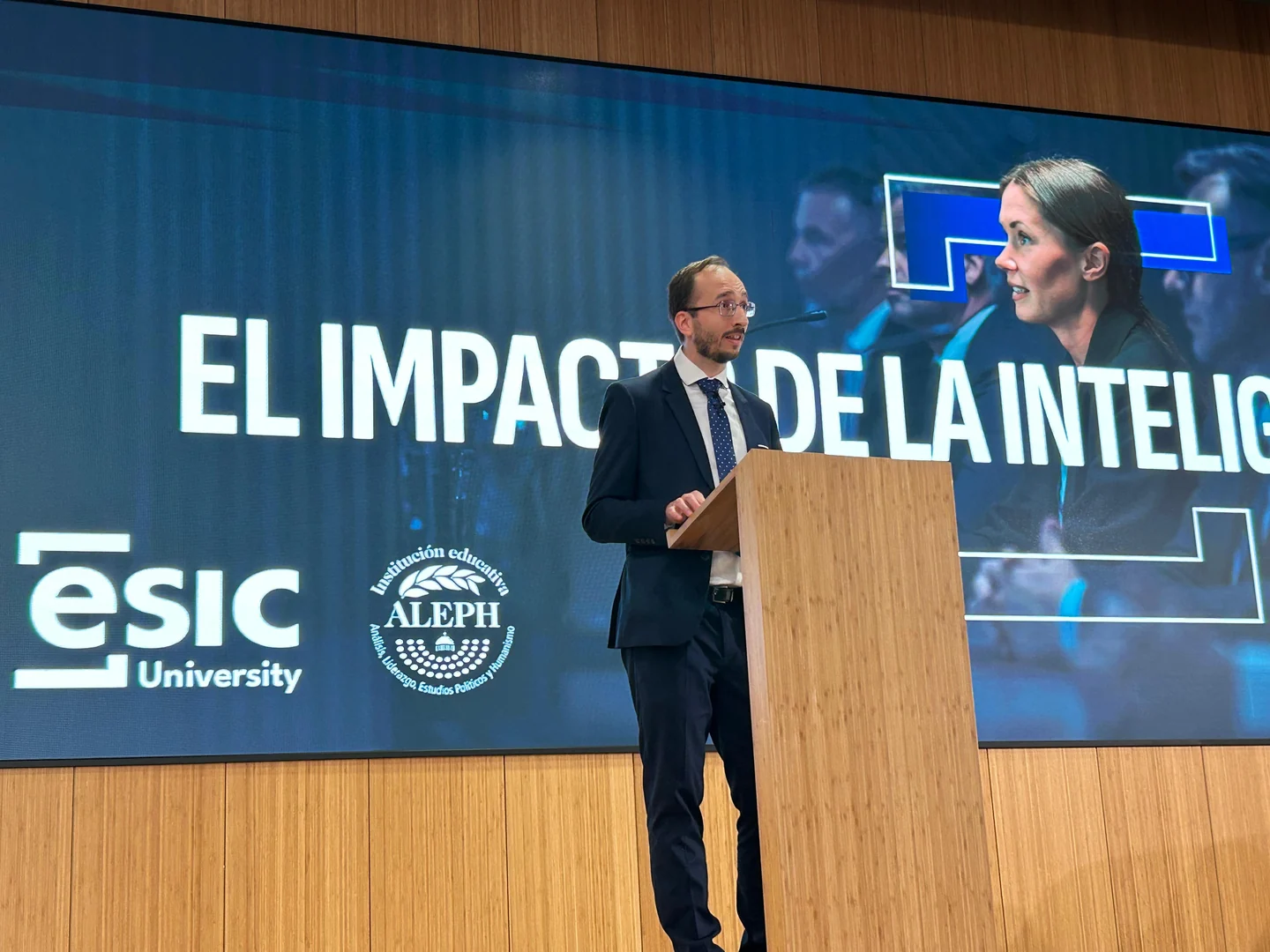
Pablo Martín, editor of estrategIA and Academic Director of the ALEPH Educational Institution.
Finally, Pablo Martín, editor of estrategIA and moderator of the roundtable, closed the event with a recommendation voiced by the publication’s director, Fernando Nieto: we need to think in terms of artificial intelligence, think on a different scale, and recognise that we have access to the knowledge of the best engineers, professors and communicators… A new era of opportunities.
Cite this essay
ALEPH team. “AI’s future and social impact debated at estrategIA’s first event at ESIC University.” estrategIA, issue 032, 8 May 2024. English edition, 29 September 2026. https://elcontemplador.github.io/estrategia-english/essays/032/