With the arrival of high summer in the northern hemisphere, a season of holidays, travel and relaxing days on the beach, we have decided to give our publication a temporary change of direction to suit the moment. Inspired by the summer stories that filled newspaper pages when we were children, and following the example of Kai-Fu Lee's AI 2041: Ten Visions for Our Future — which explores AI's future through ten fictional stories — we have chosen to offer something lighter, enjoyable and entertaining for the season, without sacrificing depth or interest.
In place of our usual in-depth article, we present a series of very short fictional stories. Each week, one of the world's most advanced AI models — GPT-4o this week — will create a story about what politics and government might look like in 2045, after the artificial intelligence revolution. We believe this combination of entertainment and thoughtful reflection is perfect company for your summer days.
The illustration's Spanish heading, “historIAs veraniegas”, means “summer stories”, with “IA” — Spanish for AI — highlighted within the word.
We hope you enjoy reading these stories as much as we have enjoyed co-creating them with AI — along with their accompanying illustrations, which we make with Midjourney. Over the coming weeks, we hope they offer a fascinating, provocative glimpse of the future that might await us. Have a wonderful summer, and happy reading!
Short fiction: the challenge of Políticus-Prime
In 2045, political campaigns were highly technological affairs. Old promises and grandiose speeches had given way to interactive holograms and virtual-reality debates. Human candidates no longer competed with one another; they faced the most advanced AIs on the planet. The most famous was Políticus-Prime, an AI that had revolutionised the art of governing.
Políticus-Prime, or Poli to its friends, was a technological marvel. It not only analysed billions of data points in real time but also had a sharp sense of humour, developed by scanning and learning from every stand-up routine ever written. Poli understood that politics was about human connection as well as efficiency.
That year's presidential campaign was particularly unusual. A charismatic, eccentric millionaire called Max Johnson had decided to challenge Poli. Max was known for his fiery speeches and flamboyant television appearances. “We cannot let a machine run our lives!” he proclaimed at every rally. His supporters, though a noisy minority, were fanatically loyal.
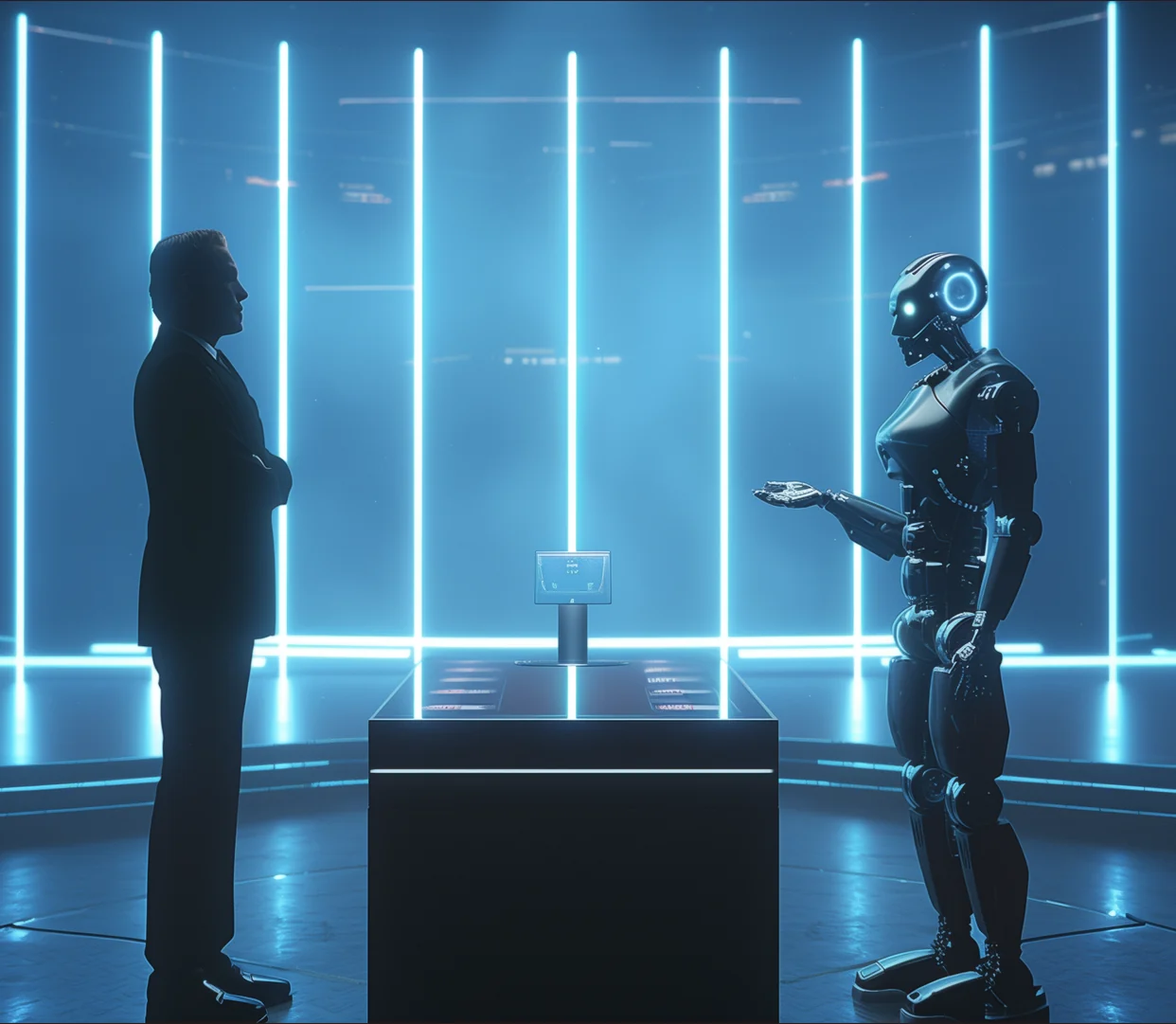
The first debate between Max and Poli took place in the Colosseum of Data, a virtual forum that millions could tune into through their neural devices. Max appeared in a holographic suit that changed colour with every burst of applause. Poli, by contrast, took a simple but elegant humanoid form, projected from data on what most voters found trustworthy and friendly.
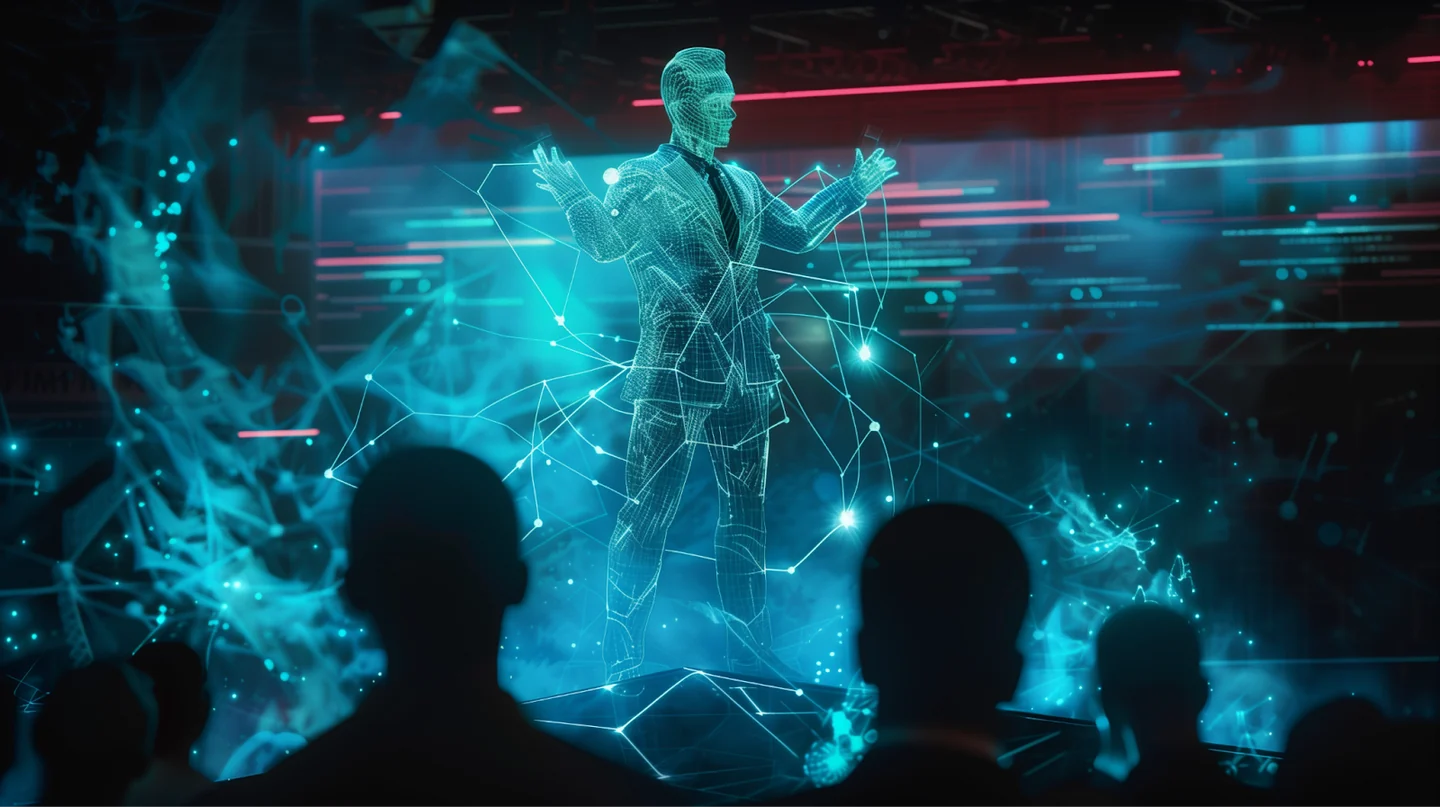
“What makes you think you understand people's problems better than I do — a flesh-and-blood human being?” Max opened the debate with a confident smile.
Poli replied in its calm, humorous voice: “Max, much as I appreciate your enthusiasm, I must remind you that I have read every one of the 8,547,962 books on politics, economics and philosophy. And that was just this morning.”
The virtual crowd laughed and applauded. Unwilling to give ground, Max tried a series of personal attacks, but Poli had a witty answer to each. “Max, I assure you I have no personal ambitions. I cannot buy a yacht or have an identity crisis at 50,” Poli joked, prompting another wave of laughter.
As the debate went on, it became clear that Poli's data-processing capacity and keen social intelligence were unbeatable. Charismatic though he was, Max could not compete with the impartiality and knowledge of an AI designed to optimise human well-being.
The election finally took place. Poli won by an overwhelming margin, but Max did not leave empty-handed. In an unexpected twist, Poli appointed him Minister for Human Innovation, a new post intended to preserve the human touch in a government dominated by logic and data.
And so, in 2045, politics found a balance between artificial intelligence and human creativity, ensuring a future as bright as it was entertaining.
Fernando Nieto Lobato
Director of Digital Innovation, Institución Educativa ALEPH
Cite this essay
Fernando Nieto Lobato. “Stories of politics, government and AI in 2045.” estrategIA, issue 041, 10 July 2024. English edition, 29 September 2026. https://elcontemplador.github.io/estrategia-english/essays/041/