Historical note: this is the original Christmas 2023 selection. Its recommendations and product claims are preserved as published; they are not current buying recommendations or pricing advice. Availability and specifications have not been rechecked.
Christmas is almost here, and this week we bring you a lighter topic, very much in keeping with the season. Gift ideas for this time of year abound in the media, on blogs and on social networks. Before we begin our own list, dear readers — and knowing that many of you are closely involved in politics — we would like to recommend this list of gifts for political geeks, published a few weeks ago by the new Política Creativa newsletter. It is an initiative by Xavier Peytibi, who, among many other things, teaches on several programmes at Institución Educativa ALEPH, and Juan Víctor Izquierdo, the creators of Beers&Politics.
We on the editorial team of estrategIA at Institución Educativa ALEPH believe that although it is still a fledgling sector as far as the general public is concerned, artificial intelligence also deserves a list of potential Christmas gifts. Below, then, we offer a small selection of 10 interesting options directly related to AI, to give to someone else or to yourself, divided into two main categories: books to help us understand the coming revolution, and AI gadgets.
Books
English edition note: the Spanish book titles are retained to identify the editions linked in the original article. English explanations of titles and cover text below are translations for the reader, not claims that an edition was published under that English title.
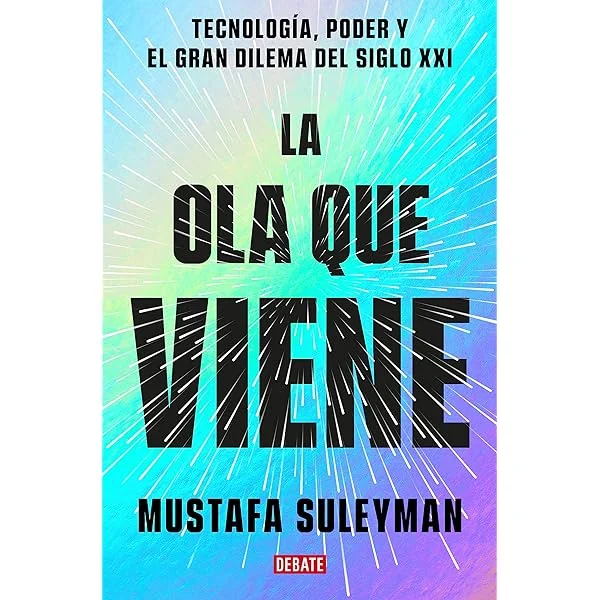
La ola que viene: Tecnología, poder y el gran dilema del siglo XXI
Spanish cover retained. Title translated for the reader: “The coming wave: technology, power and the great dilemma of the twenty-first century”. The cover names Mustafa Suleyman and the publisher Debate.
This volume by former DeepMind leader Mustafa Suleyman — from Google's AI laboratory — and Michael Bhaskar, which we discussed in the first issue of estrategIA, is essential reading for understanding how emerging technologies, especially artificial intelligence, are reshaping the global balance of power and posing unprecedented ethical and social challenges. The author delves into the dilemma of how nations and organisations can navigate between technological progress and preserving fundamental humanistic values. Through detailed analysis and case studies, the book explores the political, economic and social implications of the accelerated AI adoption that lies ahead. It also focuses on how technology affects privacy, security and fairness, inviting readers to reflect on the future we are building and the decisions we must make in this era of rapid change.
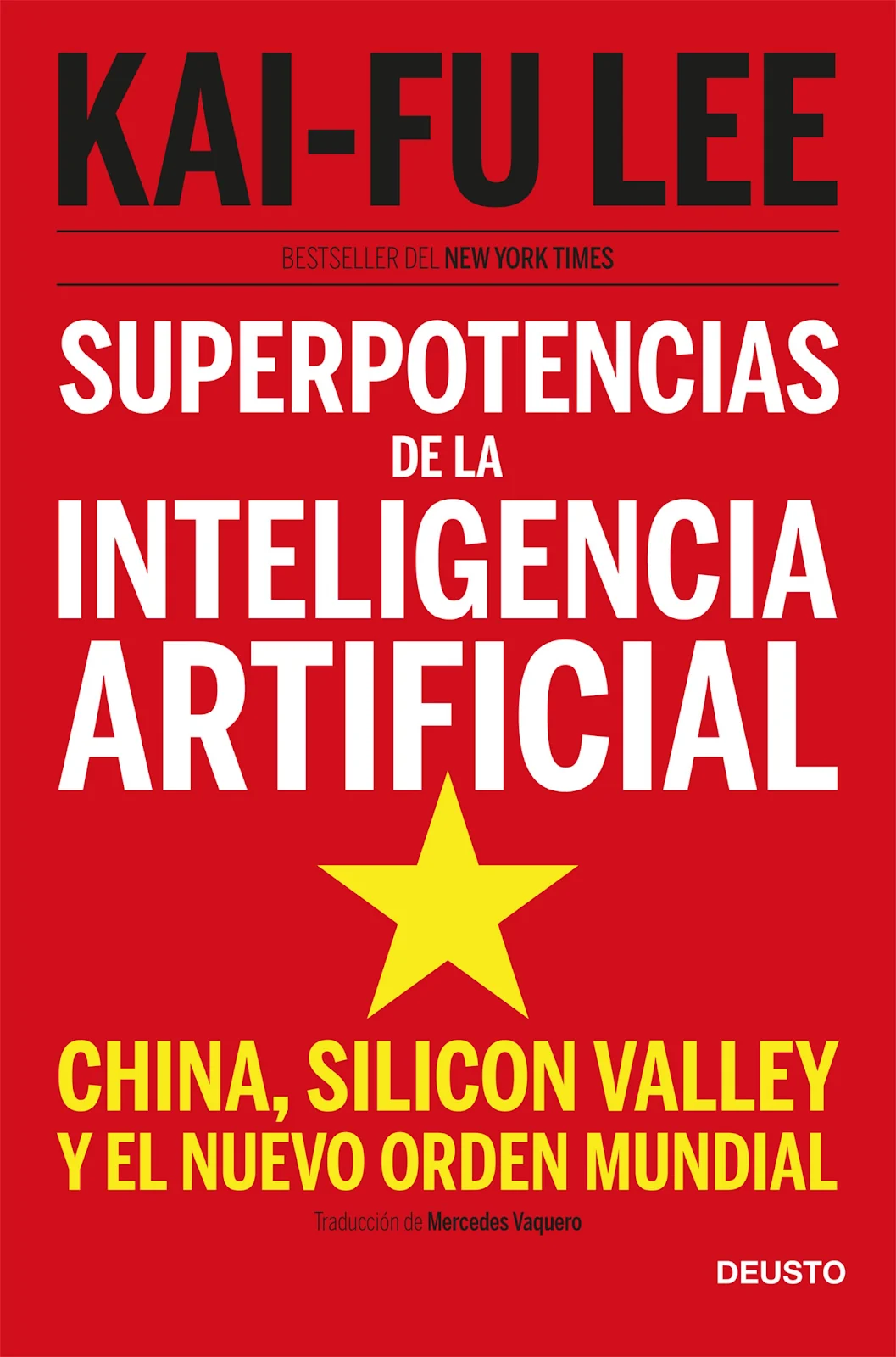
Superpotencias de la inteligencia artificial: China, Silicon Valley y el nuevo orden mundial
Spanish cover retained. Title translated for the reader: “Artificial intelligence superpowers: China, Silicon Valley and the new world order”. The cover identifies Kai-Fu Lee as the author, Mercedes Vaquero as the translator, Deusto as the publisher, and the book as a New York Times bestseller.
This book by Kai-Fu Lee, an AI expert with experience in both China and Silicon Valley, offers an insightful view of the global race for supremacy in artificial intelligence. Lee analyses how China and the United States are leading this field and how their advances will redefine the geopolitical and economic future. The book not only highlights each region's strategies and strengths, but also reflects on AI's impact on employment and the structure of society. With a balanced approach and deep insight, Superpotencias de la inteligencia artificial is essential reading for understanding the dynamic AI landscape in today's global context. As our longer-standing readers will know, Pablo Martín, the editor of estrategIA, offered us an interesting introduction to its contents in issue #4 of the newsletter.
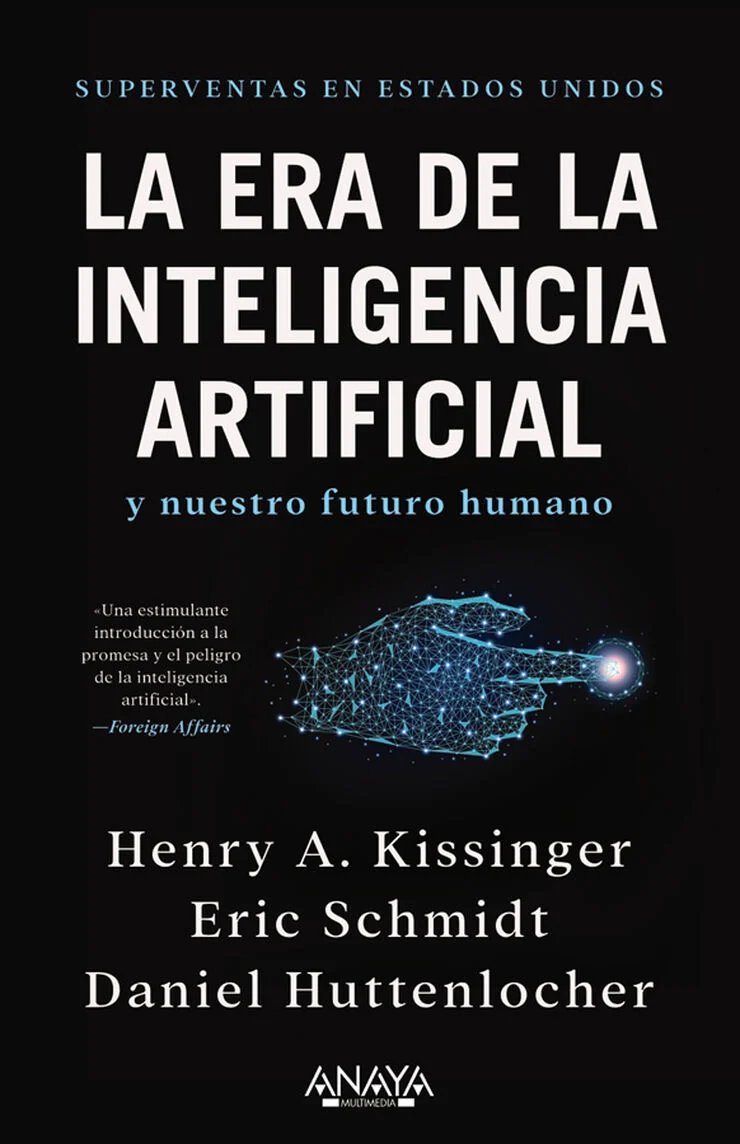
La era de la inteligencia artificial y nuestro futuro humano
Spanish cover retained. Title translated for the reader: “The age of artificial intelligence and our human future”. The cover names Henry A. Kissinger, Eric Schmidt and Daniel Huttenlocher, identifies the book as a US bestseller and shows the publisher Anaya Multimedia. Its Foreign Affairs endorsement reads, translated from Spanish: “A stimulating introduction to the promise and danger of artificial intelligence”. The endorsement's original English wording has not been independently checked.
We have not yet discussed this volume, published by Anaya Multimedia, in our newsletter, but perhaps we will in the future, because it contains a particularly interesting chapter devoted to AI in security and defence. Written by the recently deceased Henry A. Kissinger, Eric Schmidt and Daniel Huttenlocher, it is a profound work exploring the intersection of AI and humanity's future. Written by authors with experience in politics, technology and academia, it offers a multidisciplinary perspective on AI's impact on society. It analyses how this technology is redefining areas such as ethics, economics and global politics, and poses critical questions about coexistence between humans and intelligent machines.
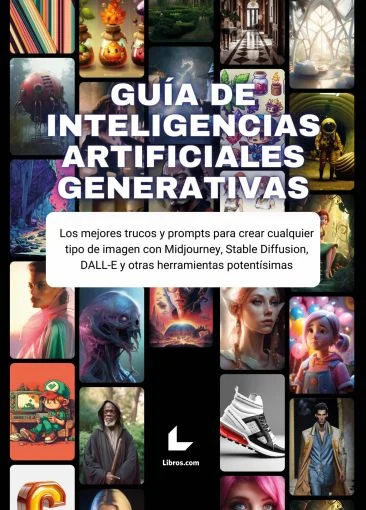
Guía de inteligencias artificiales generativas
Spanish cover retained. Title translated for the reader: “A guide to generative artificial intelligence”. Its subtitle reads: “The best tips and prompts for creating any kind of image with Midjourney, Stable Diffusion, DALL-E and other extremely powerful tools”. The publisher shown is Libros.com.
After three substantial essays offering different perspectives on AI, here we suggest something different and more practical: a very recently published guide to creating high-quality images with image-generation AI, especially Midjourney. It was created by the Spanish entrepreneur Javi López, who is also behind one of the recent AI tools attracting the most attention for its ability to enhance existing images with generative AI: Magnific AI.
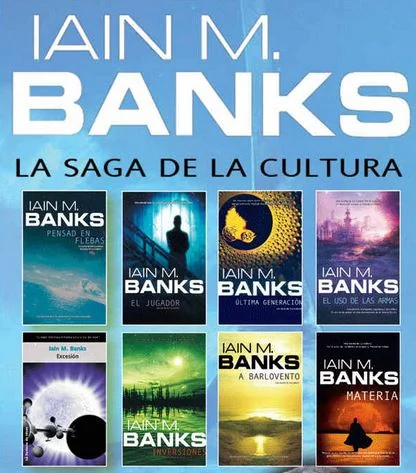
The Culture series — La Cultura
The original image presents Iain M. Banks's series through eight Spanish covers. Their titles, with explanatory translations, are: Pensad en Flebas (“Consider Phlebas”); El jugador (“The player”); Última generación (“Last generation”); El uso de las armas (“The use of weapons”); Excesión (“Excession”); Inversiones (“Inversions”); A barlovento (“To windward”); and Materia (“Matter”).
It seemed worthwhile to include fiction in the list, and the Culture novels are almost unanimously recommended as a way of glimpsing a possible future for humanity guided by artificial intelligence.
The Culture series, created by the Scottish author Iain M. Banks, is a series of science-fiction novels offering a fascinating, in-depth exploration of a utopian intergalactic society. This society, known as the Culture, is governed and administered by advanced, benevolent artificial intelligences known as Minds. These AIs have considerable autonomy and power, managing spacecraft and habitats and making key decisions for society's wellbeing.
The Culture series is relevant to artificial intelligence because of its imaginative, detailed treatment of how AIs might interact and coexist with human beings in a futuristic setting. Banks explores themes such as AI morality, autonomy, resource management and the balance of power between humans and machines. Through complex narratives and well-developed characters, the series offers a unique vision of a future in which AI not only complements but improves and enriches the human experience. It is essential reading for anyone interested in the possible cultural, ethical and social implications of advanced coexistence between humans and artificial intelligence.
Devices

Humane Pin
Original product image: a white Humane Pin attached to a sweatshirt.
The Humane Pin is an innovative wearable device developed by Humane, a company founded by former Apple executives Imran Chaudhri and Bethany Bongiorno. Designed as an alternative to smartphones, it attaches magnetically to clothing and uses a camera and sensors to interact with the user's surroundings through artificial intelligence. Unlike conventional phones, it has no screen and is operated mainly through voice commands, although it includes a small projector to display icons and text on the user's palm.
This minimalist, user-centred approach represents an interesting and potentially transformative direction for wearable technology, although its reception has been lukewarm and most analysts are unconvinced that it could replace mobile phones today.

Pixel 8
Original product image showing the front and rear of a Google Pixel 8.
The Google Pixel 8 and Pixel 8 Pro incorporate a range of advanced generative AI features powered by Google Assistant. These include the assistant's ability to summarise website text quickly, offering a breakdown of the content and its key points. It can also translate text into several languages and read the converted content aloud. Google has also enhanced the Recorder app with generative AI, enabling it to provide high-level summaries of recorded content. These innovations underline Google's commitment to integrating AI deeply and practically into its mobile devices, of which the Pixel 8 is only the first example. This X thread summarises some of the phone's main AI features, following the recent addition of Gemini, Google's new artificial intelligence.
Very probably, 2024 will be the year when we see powerful AI integrations in many new high-end mobile phones. Indeed, although the process is still somewhat complicated, it is already possible to run fairly powerful open-source AI models such as Mistral 7B locally on the latest iPhone. For now, however, the Pixel 8 is probably the leading reference point for integrated AI.

Looking Glass Go
Original product image of the folding Looking Glass Go display, showing a colourful space scene.
Looking Glass Factory introduced the Looking Glass Go as the world's first portable holographic display. It allows users to experience immersive 3D images without special glasses or headsets. It uses high-precision light-field optics to display holograms in a six-inch viewing area that can be tilted to the desired angle. With an AI-powered software suite, it transforms ordinary 2D photographs into 3D holograms and enables users to create and view holographic art and 3D models. Using the Liteforms app and ChatGPT, users can also generate and customise holographic characters. The device is compact, weighs 235 g and folds for easy transport. It connects to a PC or Mac through USB-C, and can also run from an external battery for mobile use. It is currently available to pre-order on Kickstarter, where it has already raised more than half a million dollars.

Meta's Ray-Ban glasses now integrate AI to interpret the visual environment
Original product image of black Ray-Ban smart glasses with cameras built into the frames.
Meta has released an update for its Ray-Ban glasses, adding an AI feature that can interpret images in real time. Still in beta, it allows users to ask the glasses to identify objects or specific information through voice commands. For example, they can recognise caffeine-free varieties of tea or translate menus in other languages. The glasses, which have no display, respond through speech and save photographs and responses in the Meta View app. This development is a step forward in integrating multimodal AI into wearable devices, promising significant advances in human–machine interaction and everyday assistance through technology.

Moxie
Original product image of the turquoise Moxie robot with a smiling face on its display.
AI robots are very probably a category of devices that will thrive over the coming years. Among those available on the market, one has particularly caught our attention because of its approach: Moxie®, described as an advanced social robot created by experts in technology, neuroscience, child development and creative storytelling, designed to interact empathetically with children aged five to ten. Unique in its ability to engage in believable social interactions and respond emotionally, this robot uses generative artificial intelligence, natural language processing and computer vision. More than a simple robot, Moxie offers updated, game-based emotional and social content. Its daily interaction with children, centred on weekly themes and missions, promotes social, emotional and cognitive learning. It also respects privacy by processing video data locally without transmitting it.
Fernando Nieto Lobato
Director of Digital Innovation, Institución Educativa ALEPH
Cite this essay
Fernando Nieto Lobato. “Discover 10 AI-related gift ideas for Christmas.” estrategIA, issue 012, 20 December 2023. English edition, 29 September 2026. https://elcontemplador.github.io/estrategia-english/essays/012/