We are especially pleased to welcome an article this week from Josep M. (Pep) Martorell, who served for almost a decade, until just a few months ago, as Associate Director of the Barcelona Supercomputing Center. Long-standing readers may remember that in issue 74 we recommended his conversation with AI communicator Jon Hernández. We continue to recommend it to anyone wishing to explore the fascinating subject Pep brings us this week, alongside his Substack newsletter, where he regularly examines these questions as well as many other engaging topics in science communication.
Drawing on that privileged perspective of knowledge and professional experience, he offers a clear, direct account of what is at stake: why national and international projects in supercomputing and AI are now indispensable.
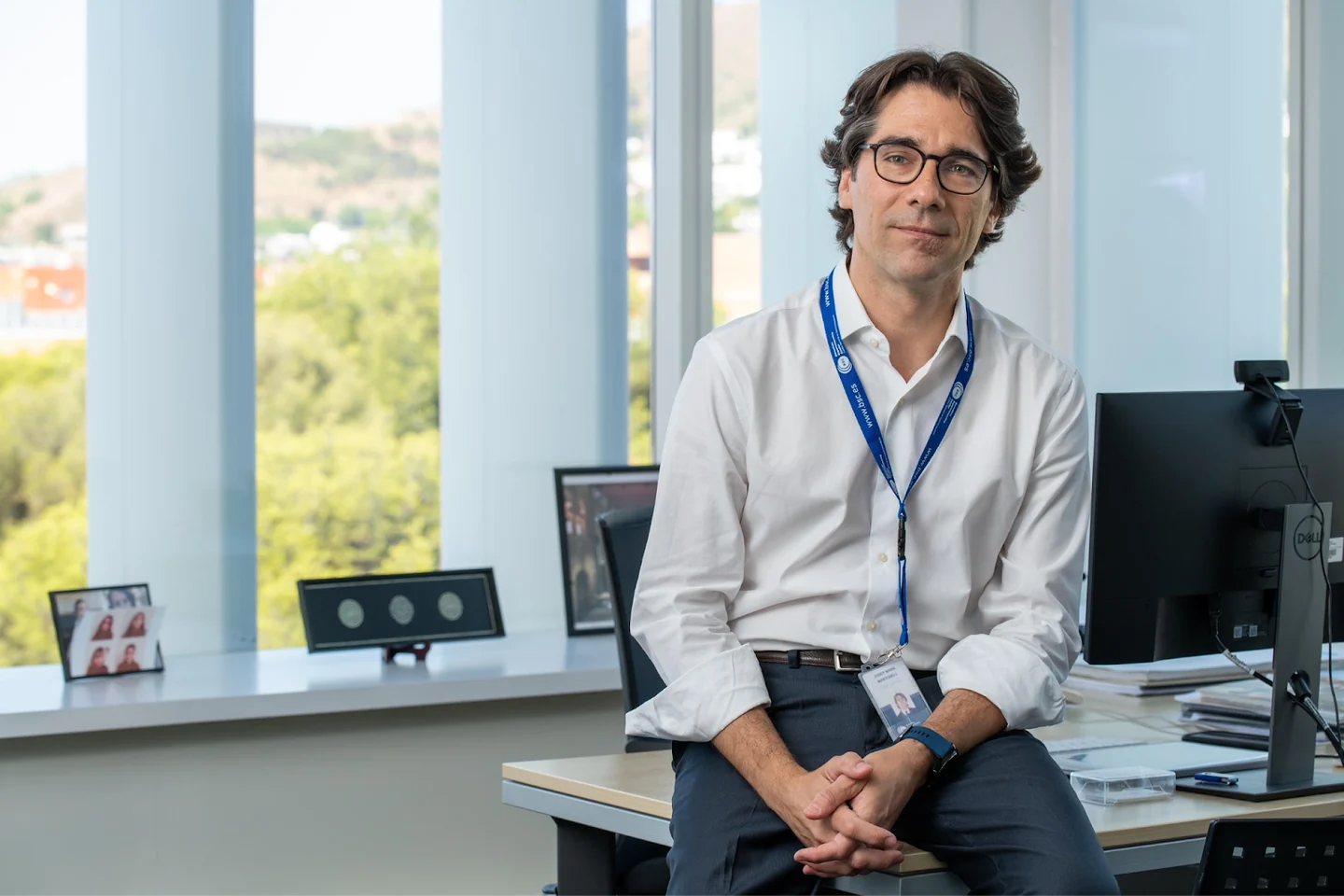
One of the first remarks I remember hearing when I joined the Barcelona Supercomputing Center (BSC), back in 2016, came from an American researcher illustrating supercomputing's importance to scientific practice: “Who doesn’t compute, doesn’t compete”.
He said it during a discussion about the future of research without massive computational resources. This was towards the end of the last decade, long before the general public discovered artificial intelligence's potential with the unveiling of the first ChatGPT in November 2022. Yet in academia, the difficulty of remaining at the frontier of knowledge without substantial computing capacity was already clear.
For decades, pioneers across disciplines had known that certain systems of intricate equations describing natural phenomena could be solved only through numerical approximations, made possible solely by what we then considered supercomputers. It was at that point, thirty or forty years ago, that the first national supercomputing centres emerged across much of the developed world, designed to make these resources available to the scientific community and thereby advance their countries.
In recent years, the leap in artificial intelligence has opened a second major use for this large-scale infrastructure. The task is no longer only to solve the complex equations governing natural processes faster, but also to generate knowledge from vast amounts of data.
In fields such as the life sciences and social sciences, constructing precise mathematical models of how the world works is often difficult. Data, however, is abundant. AI's current power allows us to extract enormously valuable information from it: developing new hypotheses, discovering patterns invisible to any scientist's unaided eye, and radically accelerating the processing of huge volumes of information. These advances are no longer theoretical. They are transforming scientific practice and redefining the speed at which we can generate knowledge.
One very recent example of this paradigm shift is the 2024 Nobel Prize in Chemistry, awarded for the use of AI in protein folding. This revolution, opening the door to faster discovery of new drugs and treatments, shows how data, algorithms and supercomputing together can transform entire disciplines. Likewise, major international initiatives such as the Trillion Parameter Consortium are developing foundation language models trained on scientific data, capable of accelerating progress in fields as varied as physics, biomedicine and energy.
This convergence of supercomputing and artificial intelligence is placing major computing centres at the heart of practically every area of knowledge. Public investment in this field is therefore strategic, as are the geopolitical alliances being woven around the world.
From my European and Hispanic perspective, I see both light and shade. The good news is that the European Commission's urgent efforts are beginning to bear fruit: today, no European researcher is excluded from scientific competition for lack of access to supercomputing and AI resources — interested readers can look into the EuroHPC programme. The bad news is that Latin America and the Caribbean still have few significant projects and, above all, still lack the political cooperation essential for their researchers to compete on equal terms with colleagues elsewhere.
I have spent ten years co-leading the BSC, Spain's national supercomputing centre. During that time, I have seen the purchase and installation of two major classical supercomputers and two quantum computers, involving investments of hundreds of millions of euros. I have also learned that those machines would be useless without the more than a thousand professionals who now manage the infrastructure and conduct cutting-edge research with it.
I am well aware that these are expensive commitments, difficult to sustain over the long term. We are talking about investments of millions and time horizons rarely shorter than a decade before results emerge. And we know that public-policy timetables do not always fit projects of such duration.
But the alternative is far worse. Failing to provide this infrastructure condemns a research community to being unable to compete, or even collaborate, with its international peers. Today, no developed country — and we should include some developing countries too — lacks significant supercomputing investment for its scientific community and, increasingly, its industrial base. It is not a sufficient condition for playing a significant role in the world of knowledge, but it is an absolutely necessary one.
As that American scientist I heard in my first days put it: “Who doesn’t compute, doesn’t compete”. The maxim applies to a research group, an academic institution and, increasingly, an entire country or continent.
These are costly, long-term commitments. But today they are indispensable if we are to avoid irrelevance.
Josep M. (Pep) Martorell
Teaching Fellow at ESADE Business School and Associate Director of the Barcelona Supercomputing Center (2016–2025)
Substack newsletter: DeepTech & Science
Cite this essay
Josep M. (Pep) Martorell. “Supercomputing and AI: strategic investments to avoid irrelevance.” estrategIA, issue 099, 20 August 2025. English edition, 29 September 2026. https://elcontemplador.github.io/estrategia-english/essays/099/